Series Production with Additive Manufacturing

Repeatable quality, flexible production without tooling investment.

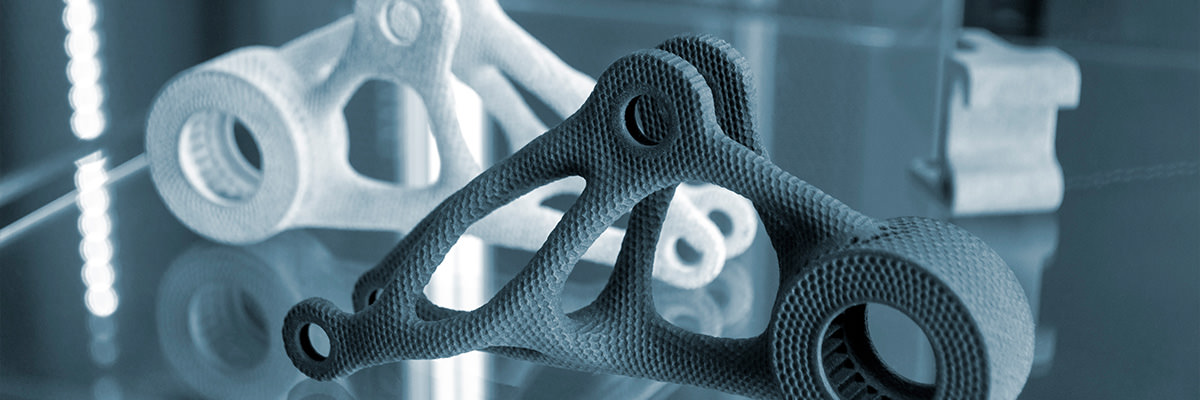
Once prototyping and design validation are complete, we carry the approved part into low-to-medium volume series production. The core advantage of additive manufacturing in series production is that we can build complex, consolidated geometries with repeatable quality and design flexibility, without any mold or dedicated fixture investment.

Series Production with Additive Manufacturing
Series Production Without Tooling Investment

In traditional series production, investing in tooling and fixtures lowers the per-unit cost, especially at high volumes. But for low-to-medium volume parts, complex geometries, or parts that need frequent design revisions, that investment can become a disadvantage in both cost and time.

Because additive manufacturing doesn’t require a dedicated mold or fixture investment to produce a part, it removes the need to build new tooling every time the design changes. That makes it a more flexible and economical production alternative for low-to-medium volumes, short lead times, and projects with frequently updated designs.

How Do We Ensure Repeatability?
Controlled production parameters We standardize the production process using validated process parameters and qualified material/powder lots.
Measurement and traceability We track within-lot and lot-to-lot dimensional consistency with 3D scanning, CMM and other measurement methods, and record the results.
Verifying process changes We verify a new parameter set, material/powder lot or build orientation through measurement and the necessary quality checks before taking it into series production.
A Realistic Perspective

For complex or consolidated geometries, medium production volumes, frequent design revisions, and short lead times, additive manufacturing can offer significant advantages for series production. On the other hand, for simple-geometry, high-volume parts, traditional production methods are often more economical. We choose the production method by weighing part geometry, volume, cost, lead time and technical requirements together.

Next step

Let's plan your series production needs together.

Share your part, production volume and technical requirements; we'll evaluate unit cost, lead time and a quality plan, and present the production approach that fits your needs.

COOKIE SETTINGS

This website uses cookies

We use cookies on our website to provide you with a better experience. For more information, please review our Cookie Policy.